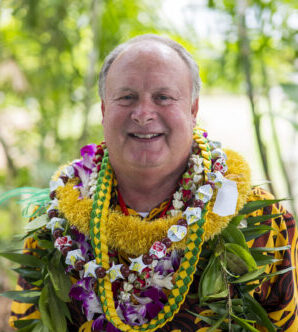
Steve Hanks
- Island: Hawai‘i
- District: Hawai‘i
- Class: School Registrar
- Years of Teaching: 30
- Field/Office: Honokaa High & Intermediate School
- Complex Area: Honokaʻa-Kealakehe-Kohala-Konawaena (HKKK)
- Home Town: Hopkins, MN
What do you love about teaching in Hawaiʻi?
I love teaching in Hawaii because of how we are all connected to our Pacific Island culture. We have so many things about our islands that are unique and special.
What do you value as a strength of the Hawaiʻi Department of Education?
The strength of the Hawaii Department of Education is the people. The teachers, staff, and administration care about people and put the concerns of others before their own. The aloha spirit is everywhere.
What do you value as a strength of your particular school or office? What is your complex area known for?
West Hawaii Complex is on the west side of Hawaii island. Geographically this is a large district. Our district is mostly rural and each area is quite diverse from the hot and dry Kona coast to the lush, green, wet tropical areas like the Hamakua coast.
What is unique/special about your school and/or community? What do you enjoy most about teaching there?
Honoka’a High and Intermediate School is special because we have grades 7-12. We are located on the Hamakua coast which is the rugged north coast of Hawaii island. This a large district that spans about 30 miles from Paauilo to Kawaihae along the west coast.
What are 2 main challenges you face (or you feel teachers face) as an educator in Hawaiʻi?
Teachers new to our school can find it difficult to recognize and adapt to the island culture. Where I teach it is rural. The lifestyle and social network is family oriented—and perhaps new to some teachers.
What are the qualities that make a Hawaiʻi Department of Education educator successful? Explain.
Be a good listener. Observe and reflect. Understand that you might be experiencing some form of culture shock when you first begin.
What words would you use to describe your students? Explain.
Our students are ethnically diverse. They are typically bilingual in Hawaiian, Hawaiian Pidgin, Ilicano, Tagalag, or Marshallese. ⅔ of our students receive Free Lunch.
Free time: What are some fun activities that people can enjoy doing outside school hours on the island that you work at?
When you live on Big Island there are many outdoor activities to do like hiking, water sports, golf
Free time: What are some fun activities that you personally enjoy doing on the island or complex area/neighborhood you work in?
We frequent the beaches along the west side of the island. I also enjoy riding my bicycle near my home and around the area as well as hiking and going for walks. We spend a lot of time out doors. We do have a movie theater in town that we like to support.
What’s your favorite local food on your island? -OR- Where’s your favorite place to eat on the island? Describe the food!
My favorite fish is Ono, grilled or baked. One of the favorite places to eat in Honoka’a is Tex Drive In and it’s world famous malasadas.
What are some housing tips that you could recommend for teachers relocating to Hawaiʻi?
Housing will vary from $1700 per month in a downtown Honoka’a apartment to a house for $3200 per month. It is not uncommon to find houses selling for $500,000+ outside of town. With some houses in town selling for about $250,000 or more. I think Waimea would be more expensive. Waimea’s elevation is about 3500 feet so it is often colder with a clear wet side and dry side of town.
What advice would you give to a new teacher who wants to work in your complex area or for the Hawaiʻi DOE in general?
It will take a lot of patience and persistence to get everything checked off your checklist. It just takes time. Once you get placed in a school there is a lot of support from the other teachers and staff. You might not get the perfect teaching line your first year but over time you will be able to teach the subjects you feel most comfortable teaching.