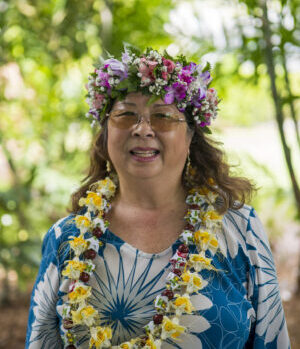
Kathleen Trifonovitch
- Island: Oahu
- Class: Complex Area Math Coach
- Years of Teaching: 33
- Field/Office: Kailua-Kalāheo (KK)
- Complex Area: Kailua-Kalāheo (KK)
- Home Town: Kailua, HI
- District: Windward
What do you love about teaching in Hawaiʻi?
I enjoy teaching in Hawaii because it’s home for me. Also, the relationships I have developed over the years with colleagues in the department have helped me to thrive professionally.
What do you value as a strength of the Hawaiʻi Department of Education?
As the nation’s only unified, statewide public school system, the Hawaiʻi Department of Education (HIDOE) offers unique advantages for educators moving to or living in the islands. Equity is insured because we operate as a single statewide district, funding, curriculum standards, and culturally responsive learning initiatives are consistently supported at every school. All teachers have access to professional growth with access to specialized training, mentorship, and professional development led by district and state experts, giving you clear pathways to advance your skills and career. Base salary scales are standard statewide regardless of which school you join, ensuring fair pay based on your experience and education. (Plus, National Board Certified teachers, teachers in high-demand subjects like Special Education or hard-to-staff locations can earn additional pay differentials!)
What do you value as a strength of your particular school or office? What is your complex area known for?
The Kailua-Kalaheo Complex has great district support. The Windward Academy offers a Lending LIbrary with resources for hands-on science lessons, STEM kids, coding activities and math manipulatives. At your request, the supplies will be dropped off at your school and picked up when they are ready for return. Lesson plans and training is also available upon request. There are also resource kits available in which materials are provided and do not need to be returned like popsicle stick catapults, paper rollercoasters, paper circuits and more!
What is unique/special about your school and/or community? What do you enjoy most about teaching there?
Nestled below the Ko’olua Mountain Range, the coastal towns of Kailua and Waimānalo make up the Kailua-Kalaheo Complex. It is a diverse community—where long-time island families and newcomers come together as one. With its tight-knit, small-town feel, peaceful surroundings, and genuine island hospitality, working with generations of families is very rewarding.
What are 2 main challenges you face (or you feel teachers face) as an educator in Hawaiʻi?
Challenges I faced as a classroom teacher were stretching classroom resource funds for supplies or learning new administrative and curriculum platforms. But you will have support from your schools and colleagues. Our statewide system provides dedicated training, community grants, and collaborative resource-sharing to ensure you have the tools to succeed.
What are the qualities that make a Hawaiʻi Department of Education educator successful? Explain.
Teaching in the islands is a uniquely rewarding journey that calls for heart, adaptability, and connection. You can thrive by bringing three key qualities to the classroom every day: Resilience & Perseverance: Moving to a new place or adapting to new school systems takes grit. Pick yourself up when there are hiccups, view challenges as learning opportunities, and keep moving forward with passion and positivity. Curiosity & Humility: Ask questions first. Be eager to listen, learn about the local school and community culture. Understand the unique dynamics of the community you serve before jumping into action. Deep Empathy for Every Student: Our students are rich with cultural and socioeconomic diversity. See each student as an individual—celebrating their unique backgrounds, understanding their stories, and leading with genuine care.
What words would you use to describe your students? Explain.
My students are diverse as they come from various backgrounds, some new to the islands and some from long time island families. My students are curious and are always asking questions. My students are unique and have different preferences and learning styles.
Free time: What are some fun activities that people can enjoy doing outside school hours on the island that you work at?
Living and teaching on Oʻahu means your off-hours are just as fulfilling as your time in the classroom. Go from grading papers to hiking lush mountain trails, or head straight to the beach to surf, paddleboard, snorkel, jet ski or unwind by the ocean with a walk along the shore or reading a book on the sand. Oʻahu boasts a vibrant city life filled with a wide variety of dining options, live concerts, local markets, theaters, shopping malls and cultural attractions. Whatever your pace, you’ll never run out of things to discover.
Free time: What are some fun activities that you personally enjoy doing on the island or complex area/neighborhood you work in?
On Oʻahu’s Windward side, life naturally slows down to a relaxing pace. My nights are peaceful, and my free time is all about simple joys—strolling through friendly neighborhoods, spending time with my family, especially playing with my grandchild or dog, Penny. On the weekends I like to browse local mom-and-pop shops or boutiques, or grab a bite at one-of-a-kind local eateries. I also enjoy attending church services and functions.
What’s your favorite local food on your island? -OR- Where’s your favorite place to eat on the island? Describe the food!
My favorite place to eat it is the Over Easy restaurant in Kailua. I love their Potato N Egg plate. Bacon, tomato jam and an over-easy egg covered with potato puree lies on a warm piece of Focaccia bread and is served with mixed greens from a local farm. Totally delicious!
What are some housing tips that you could recommend for teachers relocating to Hawaiʻi?
“Housing costs in Hawai’i are among the highest in the nation. The rental market in Hawai’i moves fast and most property managers require an in-person meeting before signing a lease. Book a short-term rental for your first 2 to 4 weeks. This gives you time to view places in person, meet landlords, and get a feel for neighborhood commutes during peak traffic. Take precautions to avoid scams. Never wire money or pay a deposit before visiting a property or verifying the management company. Always ask landlords if utilities, parking, and pet fees are included in the rent price. Consider commute time. Distance on an island is measured in minutes, not miles. A 10-mile drive during rush hour can take anywhere from 15 to 45+ minutes depending on highway bottlenecks (like H-1 traffic inbound to Honolulu or Pali Highway crossings). Aim to rent on the same side of the island or mountain range where your school is located to minimize your daily commute and maximize your personal time.”
What advice would you give to a new teacher who wants to work in your complex area or for the Hawaiʻi DOE in general?
One of the greatest assets of teaching in Hawaiʻi is the community behind you. Connect with your colleagues, ask questions, and lean into the support offered by school and complex personnel. Building these relationships enriches your personal life while tapping into a rich network of mentorship and local expertise.
What’s your favorite place to eat on your island? What kind of food is it?
Sushi Bay, Asuka Nabe, Helena’s, Nico’s
What are some housing tips that you could recommend for teachers relocating to Hawaii?
Live close to work so you don’t have to fight traffic as much
What advice would you give to a new teacher who wants to work in your complex for the Hawaii DOE in general?
Get to know the community and students