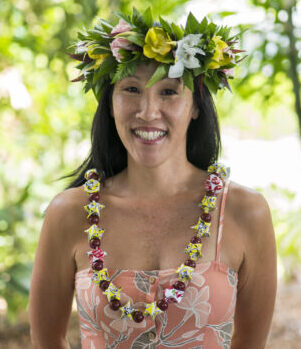
Jodi Kadoyama
- Island: Oahu
- Class: Curriculum Coordinator
- Years of Teaching: 14
- Field/Office: Mānana Elementary School
- Complex Area: Pearl City Waipahu (PW)
- Home Town: Wahiawā, HI
- District: Leeward
What do you love about teaching in Hawaiʻi?
Being born and raised in Hawai’i, I feel truly blessed to give back by teaching in the place I grew up. There’s a real sense of community and ‘ohana here that shows up in every school and classroom. Hawaii culture and values, along with all the cultures that call Hawai’i home, are woven into everyday lessons and experiences, and that’s what makes teaching here so special.
What do you value as a strength of the Hawaiʻi Department of Education?
One of the greatest strengths of the Hawai’i Department of Education is the Hā framework, Belonging, Responsibility, Excellence, Aloha, Total Well-being, and Hawai’i. It grounds the work of everyone in the department in Hawaiian values while giving students a clear and shared sense of what it means to grow up in Hawai’i. The State is fostering not only the students’ well being, but their connection to place.
What do you value as a strength of your particular school or office? What is your complex area known for?
My school, Mānana Elementary, is very small, but that is what makes it so special. The faculty and staff are truly all in, and we show up for our students and each other every day. My complex area has a strong commitment to giving students real-world, hands on way to apply what they learn. They focus carries them to high school which has a wall to wall academy structure that helps students see the connection between their education and their future.
What is unique/special about your school and/or community? What do you enjoy most about teaching there?
What makes my school and community truly special is how multigenerational it is. Many of our families have had generations come through our doors, from grandparents, to parents, to the students we have today. Even some teachers are graduates of our very school. There is a deep sense of history and pride. I love being a part of a legacy like that where the roots run so deep.
What are 2 main challenges you face (or you feel teachers face) as an educator in Hawaiʻi?
One major challenge if Hawai’i’s high cost of living, especially housing. This can make it difficult for teacher to live in the communities they teach in. Another challenge is supporting multilingual learners in our classrooms. Since Hawaii’i’s schools reflect such a diverse mix of cultures and home languages, it takes intentionality to make sure every students feels seen and supported.
What are the qualities that make a Hawaiʻi Department of Education educator successful? Explain.
A successful Hawaiʻi DOE educator is culturally responsive, adaptable, and deeply committed to community, someone who genuinely embraces the values reflected in the Hā framework. Patience and flexibility are essential, especially when navigating the unique needs of our students and families. Successful educators also bring creativity and resourcefulness, finding different ways to make lessons meaningful despite limited resources.
What words would you use to describe your students? Explain.
My students are caring, fun, diverse, inquisitive, and observant. They look out for one another with genuine kindness, bring energy and laughter into the classroom, and come from such a wide range of backgrounds and experiences. Their curiosity shows up in the questions they ask, and their observant nature means they notice more than we often give them credit for. Together, these qualities make my classroom a lively and meaningful place to teach.
Free time: What are some fun activities that people can enjoy doing outside school hours on the island that you work at?
Outside of school, I like keeping it simple, going to one of amazing beaches, hiking Koko Head before it gets too hot, or simply grabbing plate lunch with friends. The weather is always so nice, any outdoor activity will do. Living on Oʻahu means you don’t have to go far to unwind, and I try to take advantage of that whenever I can.
Free time: What are some fun activities that you personally enjoy doing on the island or complex area/neighborhood you work in?
Pearl City isn’t flashy, but there’s plenty to do. It’s great for grabbing food at local spots or picking up groceries at your favorite Asian market. You can shop around Pearlridge Mall or drive over to Waimalu for even more great restaurants. It’s a laidback neighborhood with a lot to offer once you know where to look.
What’s your favorite local food on your island? -OR- Where’s your favorite place to eat on the island? Describe the food!
My favorite local food has to be poke, hands down. There’s nothing like fresh ahi tossed in shoyu, sesame oil, and green onion, simple, but packed with flavor. I also love sushi, especially from local spots where you can tell the fish is fresh off the boat. Whether it’s a poke bowl for lunch or sushi with friends after work, it’s the kind of food that never gets old living here. A must go is Taniokas!
What are some housing tips that you could recommend for teachers relocating to Hawaiʻi?
My biggest tip is to start your housing search early and be realistic about the cost of living. Rent in Hawaiʻi is significantly higher than most of the mainland. DOE housing assistance is currently limited on Oʻahu, though a teacher housing project is in the works, so it’s worth looking into if you’re applying to neighbor islands where more options may be available. Consider roommates or house-sharing to cut costs, especially in your first year, and connect with local teacher networks or Facebook groups for leads. Locations can vary a lot across the island, so be sure to do your research before committing.
What advice would you give to a new teacher who wants to work in your complex area or for the Hawaiʻi DOE in general?
My biggest advice is to do your research before applying. Look into the school’s demographics, offerings, and location to make sure it’s the right fit for you. Checking out the school’s social media pages can also give you a glimpse into the culture and community before you even step on campus. Every complex area in Hawaiʻi has its own vibe, so understanding that ahead of time makes the transition much smoother.